

Tara Flannery is a Certified Professional Photographer (CPP), Photographic Craftsman, and Master of Photography based in Houston, TX. Tara Flannery Photography specializes in corporate headshots. See more headshots in the gallery. Contact me to book your professional headshot today!
Table of Contents
Group Composites vs. Group Photos
When it comes to corporate team photos, there’s always the question: do we go for a traditional group photo or opt for a group composite? If you’ve never heard of the latter, don’t worry—you’re not alone! Many people still aren’t familiar with the benefits of group composites, and some common misconceptions might steer you away from this modern solution.
As a professional photographer, I’ve worked with countless corporate teams, and I can tell you this: group composites are a game-changer. Not only do they make the entire process smoother, but they also save you time, effort, and money in the long run. In this blog post, I’m breaking down some common misconceptions about group composites versus traditional group photos and explaining why I always recommend composites for corporate teams.
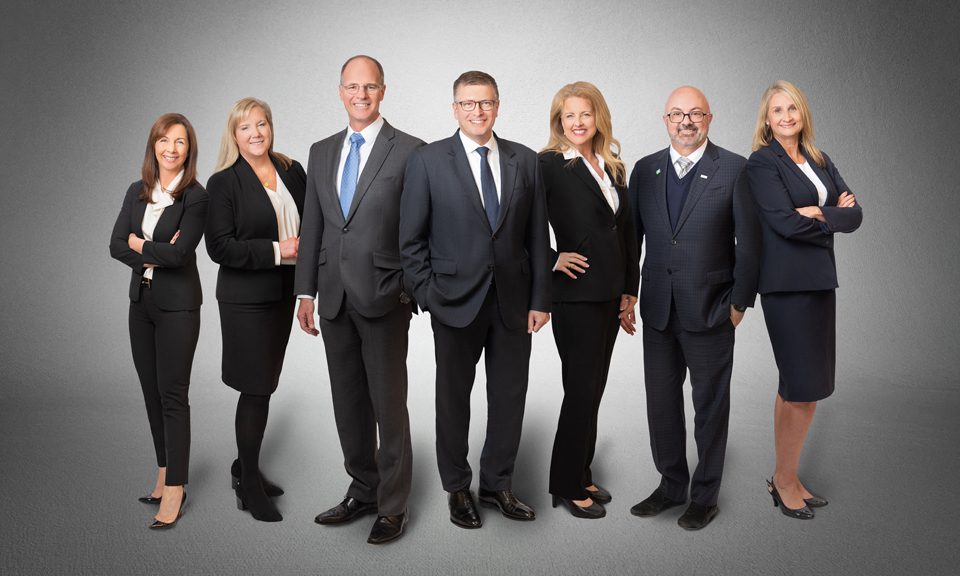
Misconception 1: “Group Composites Don’t Look Natural”
This is one of the biggest myths I hear. People tend to think that group composites are just a bunch of poorly Photoshopped individual headshots placed together. The truth? A well-executed group composite looks just as natural (if not better!) than a traditional group photo. With the right lighting, positioning, and editing, each team member looks like they were all photographed in the same room at the same time.
In fact, group composites often allow for even better lighting consistency. With traditional group photos, someone always ends up too far from the light source or blocked by another person’s shadow. Composites allow me to photograph each team member individually, ensuring the lighting is perfect every time.
Misconception 2: “Group Photos Are Faster and Easier”
At first glance, you might think setting up a single group shot would be faster than arranging individual portraits. But here’s the catch: getting the perfect group photo can take forever. Between making sure everyone is posed correctly, the lighting is just right, and no one is blinking, it’s a time-consuming process. Not to mention, coordinating schedules so that your entire team is available at the same time can be a logistical nightmare.
With group composites, I photograph each team member individually, which means we can work around busy schedules. If someone’s out sick or has to leave early, no problem—they can be photographed later and seamlessly added to the composite. This flexibility is a massive time-saver for corporate teams.

Misconception 3: “Group Composites Are Harder to Set Up”
Actually, the setup for a group composite is much simpler. When doing a traditional group photo, I have to consider every single person in the frame: their height, their position, who’s standing where, etc. It’s a lot of micro-managing! With group composites, I can focus on one person at a time. I pose each team member in the best possible light, and since they’re the only person in the frame, I don’t have to worry about how they’ll look standing next to someone else.
This also means that group composites allow for more creativity. I can adjust each person’s pose and expression individually, ensuring everyone looks their best. Plus, if you want a more modern, non-traditional layout for your team photo, composites make it easy to create that customized look.
Misconception 4: “You Need a Whole New Group Photo if Your Team Changes”
This is one of the biggest reasons I recommend group composites for corporate teams. When your team grows or someone leaves, do you really want to go through the hassle of setting up an entirely new group photo? Probably not. With a group composite, it’s incredibly easy to make updates. If someone leaves, I can simply remove their image from the composite. If someone joins, I can photograph them individually and seamlessly add them in without redoing the entire setup.
This flexibility is priceless for businesses that experience frequent personnel changes. You’ll always have an updated, professional-looking corporate photo without the need for a full reshoot every time.

The Bottom Line: Why I Recommend Group Composites Every Time
In the end, group composites offer more flexibility, efficiency, and customization than traditional group photos. They allow you to avoid the headache of trying to coordinate everyone’s schedules, provide consistent lighting and posing, and make it easy to update your team photo when someone leaves or joins.
For corporate teams, the time saved and the ability to maintain a polished, cohesive look is invaluable. Plus, by photographing each person individually, we can take the time to make sure everyone is happy with their pose, lighting, and expression, resulting in a final image that truly represents your team at its best.
So, if you’re thinking about updating your corporate team photo, consider a group composite. Trust me, once you’ve tried it, you’ll never go back to traditional group photos!
Regular Group Photos


Composite Group Photos


Tara Flannery is a Certified Professional Photographer (CPP), Photographic Craftsman, and Master of Photography based in Houston, TX. Tara Flannery Photography specializes in corporate headshots. See more headshots in the gallery. Contact me to book your professional headshot today!